


Amy Crook, community executive at Brentford and the general manager of Brentford Women, calls for equality across all levels of the game.
In 1971, women in England were finally welcomed back onto football pitches with the national team playing in front of 90,000 fans in Mexico City’s Estadio Azteca.
It was the first time in 50 years that women had been allowed to play, but not the first time ever.
In fact, until 1921, women’s football had been just as – if not more – popular than the men’s game. Then they were forced to stop playing.
During the First World War, women had taken over most of men’s roles in the workplace, society and sport.
When the war was over, the Football Association (FA) became more cautious of the success surrounding female participation in football.
After a match between Dick, Kerr’s Ladies FC and St Helen’s Ladies brought in an audience of 53,000, the largest spectator attendance since records began, the FA banned women, citing 'the game of football is quite unsuitable for females and ought not to be encouraged.'
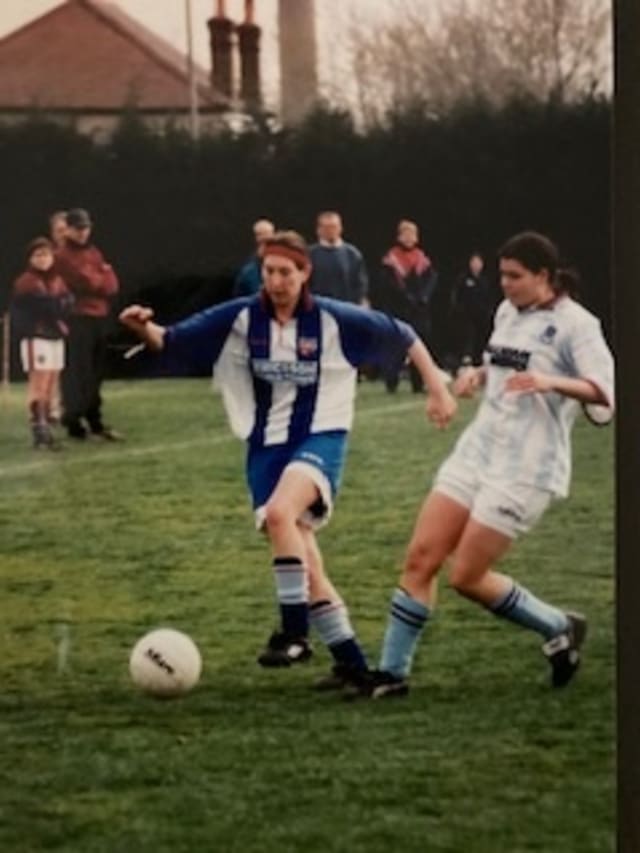
The 50-year ban was lifted 50 years ago, but its legacy lives on. A sport that had the makings of truly empowering the idea that sport is for everyone is now shrouded in inequality.
Things are on the up. Women’s football is more popular than ever, and changes are happening fast. But it’s taken a long time for this change to happen and there are still huge gaps in support, funding and pay.
As of January 2020, England’s men’s and women’s teams are paid the same amount. That includes match fees and bonuses played outside of major tournaments. However, all is not equal.
“A 2021 study comparing events in matches across genders found that women’s matches have, on average more free kicks, duels, accelerations, clearances, ball touches and passes, but fewer fouls than men’s matches. Essentially, statistics show that women’s football is just as engaging as men’s game.

“However, female fans might be put off attending matches thanks to high levels of sexual harassment. 20% of women reported having experienced unwanted physical attention while at men’s games, hence the audiences are low.
“How do we improve these things? Watching, applauding, and buying into women’s football is helpful to signal an audience. But ultimately these changes need to come from those with power (and money) – the clubs and boards who can implement proper changes to funding, exposure, and treatment of women.
“Let’s not leave it another 50 years before we achieve sporting equality.”